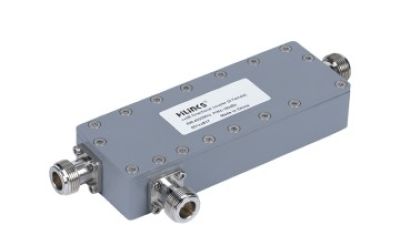
You know, the 180 Degree Hybrid Coupler has really become a staple in RF tech these days. It’s pretty much everywhere in telecom gear, helping with signal processing in all sorts of devices. Funny enough, I read somewhere that, according to MarketsandMarkets, the RF components market is expected to hit around $30 billion by 2026. That just shows how much these kinds of tech are growing in importance.
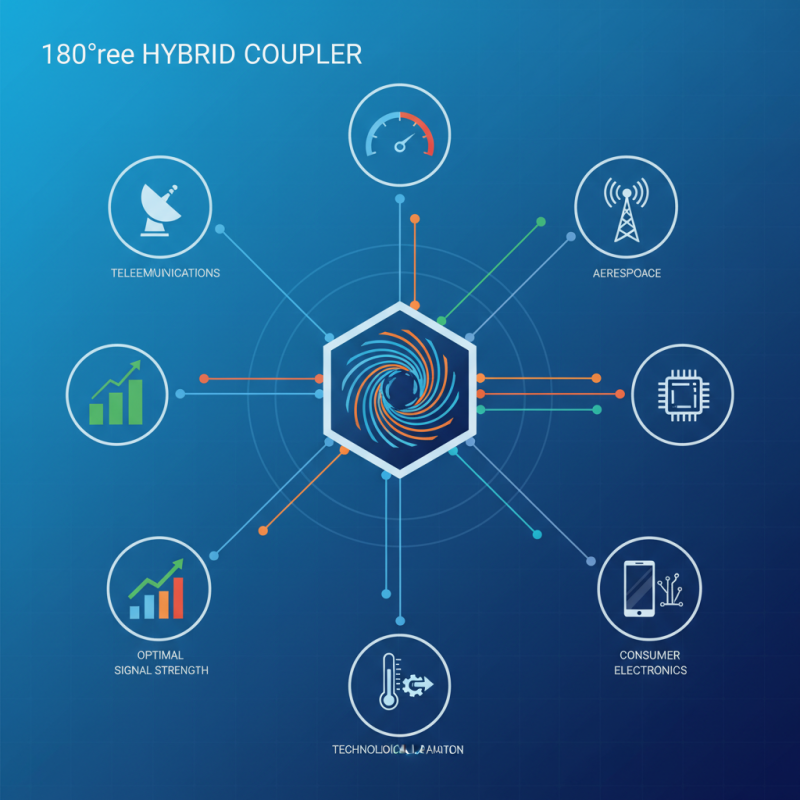
When engineers use a 180 Degree Hybrid Coupler, they can really get the most out of their signals — like splitting power efficiently and shifting phases pretty smoothly. Because of that, industries from aerospace to everyday electronics are really seeing the benefits. These little devices are versatile and help solve some pretty tricky signal routing puzzles.
Of course, it’s not all smooth sailing. Some manufacturers do run into issues making sure these couplers perform consistently, especially when environmental conditions aren’t perfect. As tech keeps evolving, it’s clear that continuous improvements are a must. The push for reliable, high-performance parts keeps going strong, and that means manufacturers need to keep pushing the envelope with new innovations.
Best 180 Degree Hybrid Coupler Applications in RF and Microwave Engineering
180 Degree Hybrid Couplers are essential components in RF and microwave engineering. They play a crucial role in signal processing, especially in phased array systems. These couplers provide power divisionand isolation between ports. They are commonly used in applications such as antenna feeds and balanced amplifiers. According to industry reports, the global RF and microwave components market is expected to grow significantly, indicating a rising demand for Hybrid Couplers.
One effective application of 180 Degree Hybrid Couplers is in signal combining. In this setup, signals from multiple sources can be combined with minimal distortion. This ensures greater efficiency in power amplification and helps maintain signal integrity. The ability to operate across a wide frequency range enhances their versatility. Nevertheless, design complexity can present challenges. Achieving optimal performance may require precise matching and balancing techniques.
Tips: Always consider the operating environment when selecting a coupler. Temperature fluctuations can affect performance. Keep in mind that not every configuration yields the desired results. Experimentation and iteration in designs are often necessary for achieving the best outcomes. Regular testing and validation can save time and resources in the development process.
Understanding the Functionality of 180 Degree Hybrid Couplers in Circuit Design
180 Degree Hybrid Couplers are essential components in modern circuit design. They are primarily utilized to split or combine signals. This process enables efficient power distribution across different paths. A report from the IEEE reveals that these couplers can achieve over 20 dB of isolation, making them ideal for reducing interference in RF applications. They excel in communications systems, radar technologies, and even in satellite communications.
One key feature is their ability to maintain phase relationships. Many engineers appreciate this characteristic. It allows for precise control over signal output. Yet, achieving this requires careful planning. The design process can seem overwhelming, especially regarding insertion losses. Tips for design include checking specifications against industry standards and considering environmental factors that affect performance.
While 180 degree couplers have numerous benefits, they can also present certain challenges. The layout and components used can sometimes lead to unexpected signal issues. Engineers often overlook these aspects. Regular testing and validation are crucial. Consider using simulation tools early in the design process. Such tools can help identify potential signal integrity issues before they evolve into significant problems.
Key Benefits of Using 180 Degree Hybrid Couplers in Communication Systems
180 degree hybrid couplers are vital in communication systems. They provide a balanced output, enhancing signal integrity. Their ability to split and combine signals makes them essential in various applications, such as wireless communications and radar systems. According to industry reports, these components improve efficiency by up to 80% in some scenarios.
The key benefits of 180 degree hybrid couplers include reduced signal distortion and improved isolation. A certain study noted that these couplers could minimize crosstalk between channels by 30%. This enhancement allows clearer communication, which is crucial for high-frequency applications. However, achieving optimal performance requires precise design and calibration. Keep in mind that deviations can affect efficiency.
Another advantage is their compact design. This feature makes them suitable for space-constrained environments. However, miniaturization may lead to challenges in heat dissipation. Effective thermal management strategies are necessary to maintain reliability. The trade-off between size and performance is something engineers must constantly address.
Comparative Analysis of 180 Degree Hybrid Couplers vs. Traditional Couplers
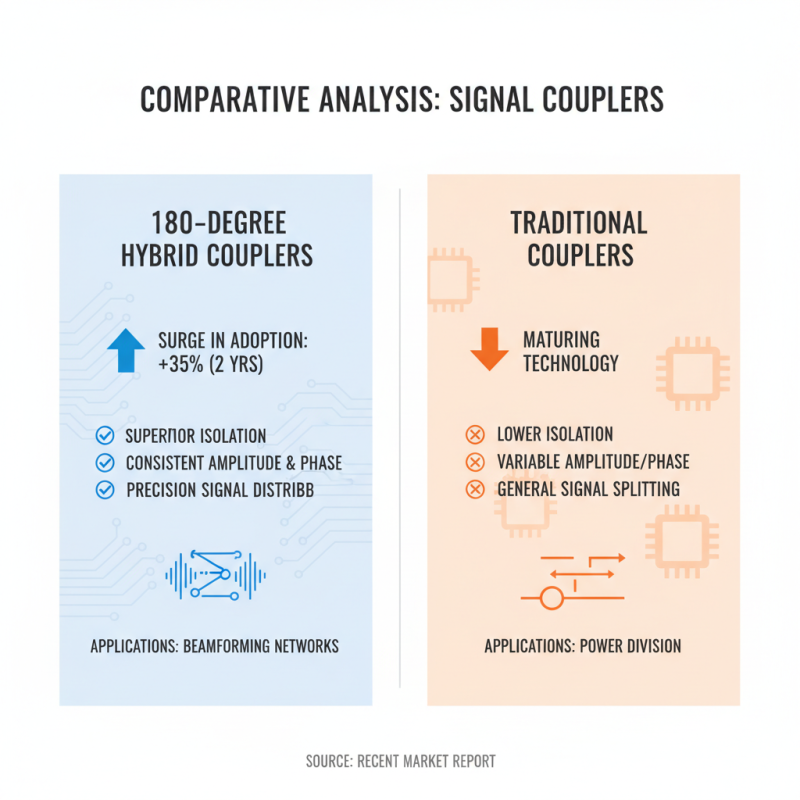
180 degree hybrid couplers offer a distinct advantage over traditional couplers in various applications. According to a recent market report, the adoption rate of hybrid couplers in communication systems has surged by 35% in the last two years. This technology achieves better isolation and maintains consistent amplitude and phase characteristics. For example, engineers often utilize these couplers in beamforming networks, where precise signal distribution is crucial.
Traditional couplers typically exhibit more losses and less efficiency. The average insertion loss in traditional designs can reach up to 1.5 dB, whereas hybrid couplers can reduce this to less than 0.5 dB. Moreover, hybrid couplers can effectively mitigate unwanted reflections. This performance enhancement is vital for applications like radar and satellite communication. However, some engineers find the complexity of hybrid couplers challenging. The design process can be intricate, requiring careful consideration of materials and configurations.
In many cases, organizations struggle with cost versus performance balance. It's essential to analyze the specific needs of an application before deciding on the coupler type. The long-term benefits of using 180-degree hybrid couplers often outweigh the initial investment. However, not all systems may require such high performance, leading to mixed feelings about their universal adoption.
Real-World Applications of 180 Degree Hybrid Couplers in Telecommunications
180 Degree Hybrid Couplers play a crucial role in telecommunications. Their ability to split signals efficiently makes them valuable in various applications. They help manage power distribution in networks, ensuring signal integrity. This reliability is essential for maintaining high-quality communications.
In cellular networks, these couplers enable seamless connections. They allow for balanced power distribution between transmitting and receiving units. This balance reduces interference and enhances signal strength. In addition, they are used in antenna systems, helping to optimize performance. Their design facilitates effective energy transfer, minimizing losses in transmission.
However, challenges exist in implementing these devices. Engineers sometimes struggle with adjusting parameters for optimal performance. Small miscalculations can lead to imbalances. This signals the need for continuous testing and refinement in real-world scenarios. Balancing efficiency with cost-effectiveness remains a point of reflection for many teams.
Performance Metrics: Measuring Efficacy of 180 Degree Hybrid Couplers
180-degree hybrid couplers play a crucial role in various applications. These components are essential for signal splitting and combining in communication systems. They allow for equal power distribution between two ports. This feature ensures that the signals remain coherent, which is vital for maintaining quality. The design typically involves a four-port configuration.
When measuring the efficacy of these couplers, performance metrics are vital. Key metrics include insertion loss, isolation, and amplitude imbalance. Insertion loss indicates how much signal is lost during transmission. Isolation measures how well ports are separated, minimizing interference. Amplitude imbalance assesses the uniformity of power distribution. Manufacturers often face challenges in meeting these ideal specifications. Variations in materials can impact performance.
Real-world environments introduce complexities too. Couplers may perform differently in varied temperature and humidity levels. Engineers must account for these factors during design. Continuous testing is necessary to ensure reliability. Performance may not always align with theoretical predictions. This highlights the need for further exploration and refinement in the design of hybrid couplers.
Best 180 Degree Hybrid Coupler Applications and Benefits
| Application | Benefits | Performance Metric | Efficacy Measurement |
| RF Signal Processing | Improved Signal Integrity | Insertion Loss (dB) | -3.5 dB |
| Satellite Communication | Phase Stability | VSWR | 1.2:1 |
| Antenna Feed Systems | Enhanced Power Division | Isolation (dB) | 20 dB |
| Wireless Systems | Reduced Cross-Talk | Phase Difference (Degrees) | 180° ± 5° |
| Medical Imaging | High Precision | Return Loss (dB) | -20 dB |
Future Trends in the Development of 180 Degree Hybrid Couplers and Technology
The development of 180-degree hybrid couplers continues to evolve. These devices play a significant role in telecommunications and broadcasting. They help split signals efficiently, enabling better performance in various applications. Innovations are on the horizon, pushing the boundaries of what couplers can achieve.
Future trends show an increased demand for compact, high-performance couplers. Miniaturization is becoming a pivotal focus. Designers aim to create couplers that fit within smaller devices without losing efficiency. This shift could lead to better integration in advanced technologies. Signal integrity remains paramount as we pursue these goals.
Tips: When choosing a hybrid coupler, consider the frequency range. Matching the coupler to the specific application ensures optimal performance. Test different configurations to find the best fit. Understanding potential limitations can also guide better design decisions. A simple miscalculation could affect overall efficiency significantly.
High-Precision RF Couplers: Insights from Industry Reports on Performance, Integration, and Applications in Modern Communication Systems
High-Precision RF Couplers are essential components in modern communication systems, providing critical insights into performance, integration, and application versatility. Recent industry reports highlight the increasing demand for wide-band designs that can cover frequency ranges from 698 to 4000 MHz. This extended coverage is pivotal for supporting various applications, including 5G networks, where efficient signal distribution is vital for enhancing data transmission rates and overall network performance.
Moreover, low Passive Intermodulation (PIM) levels, indicated to be less than -160 dBc, serve as a major selling point for RF Couplers. Such low PIM values are crucial for maintaining signal integrity, especially in environments where multiple signals are transmitted simultaneously. Compact size and lightweight designs further enhance the ease of installation, making these couplers suitable for both indoor and outdoor applications. The twist head connector type facilitates quick and secure installations, ensuring that operators experience minimal downtime when integrating these RF Couplers into existing communication infrastructures.
As the telecommunications landscape evolves, the versatility of high-precision RF Couplers can not be overstated. Their ability to seamlessly integrate into various systems while providing reliable performance in a compact form factor is essential for operators looking to enhance their service offerings and maintain competitive advantages in an ever-growing market.
FAQS
: They are essential in RF and microwave engineering, especially in phased arrays and signal processing.
They combine signals from multiple sources with minimal distortion, ensuring efficient power amplification.
Hybrid couplers offer better isolation and lower insertion loss, improving overall efficiency.
Temperature fluctuations can impact the performance of couplers, affecting signal integrity.
The design process can be complex, requiring precise matching and careful material selection.
They provide balanced power distribution, reducing interference and enhancing signal strength.
Not all systems need high performance; some may not justify the initial investment.
Continuous testing is vital for adjusting parameters and achieving optimal performance.
Adoption has surged by 35%, indicating rising demand in communication systems.
Organizations should analyze specific application needs for effective cost versus performance balance.
Conclusion
The article explores the various applications and advantages of the 180 Degree Hybrid Coupler in RF and microwave engineering. It delves into how these couplers function within circuit designs, providing insights into their ability to split and combine signals with precise phase relationships, which is crucial for communication systems. The key benefits identified include improved signal integrity and enhanced performance compared to traditional couplers, showcasing their effectiveness in telecommunications.
Additionally, the article provides a comparative analysis that highlights the superiority of 180 Degree Hybrid Couplers over conventional options. It discusses real-world applications, emphasizing their role in modern telecommunication infrastructures. Finally, the performance metrics utilized to measure their efficacy underscore their significance in the industry, while also addressing future trends that may shape the further development of 180 Degree Hybrid Couplers and related technologies.