In the world of optical communication systems, the need for faster and more reliable signal transmission is only growing. Because of that, advancing optical components has never been more important. One key player here is the Waveguide Coupler—basically, a crucial part that connects optical fibers and photonic devices on a chip. How well these couplers work can really make or break the performance of entire networks, especially as the amount of data we generate keeps skyrocketing in today’s digital world.
Waveguide Couplers are like the traffic cops for light—they help transfer light smoothly between different waveguides, making sure there's minimal loss and the signal stays crystal clear. Improving their design can seriously boost how powerful and efficient optical systems are, which is why they're so essential in things like telecom and data centers. Getting a good handle on what these couplers do, and how they work, really highlights how important they are in keeping our communication fast and reliable.
Looking into how these couplers function and what they bring to the table, it’s pretty clear—they’re more than just simple connectors. They’re actually driving the future of optical communication, helping us meet the ever-increasing demand for speed and bandwidth that modern society relies on.

Understanding Waveguide Couplers in Optical Communication Systems
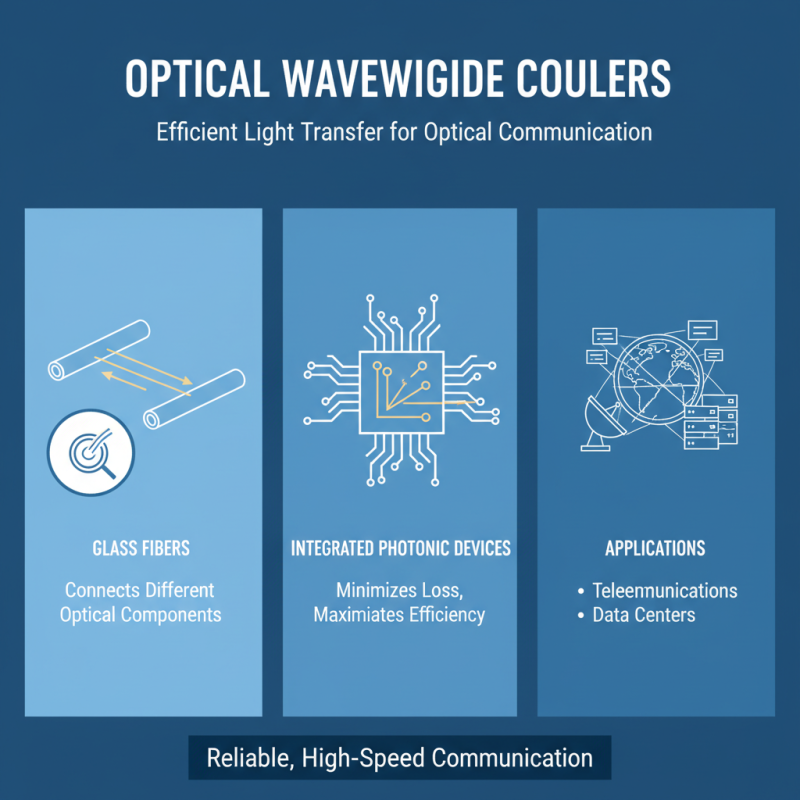
Waveguide Couplers play a crucial role in optical communication systems, facilitating the efficient transfer of light between different optical components. Their design allows for the precise interaction of light beams, minimizing loss and maximizing coupling efficiency. These couplers can connect various waveguides, such as glass fibers or integrated photonic devices, ensuring that the light signal maintains its integrity over long distances. This functionality is vital for applications ranging from telecommunications to data centers, where reliable and high-speed communication is essential.
When implementing waveguide couplers, it's important to consider the mode matching between the different optical components. Mismatched modes can lead to significant signal losses. Choosing the right coupler configuration—be it Directional Couplers, Y-junctions, or other designs—depends on the specific requirements of your system. Careful modeling and simulation can help predict performance and optimize the design before physical implementations.
Tips: Always test the coupling efficiency under different operating conditions to ensure robustness. Additionally, regular maintenance checks on couplers can prevent unexpected signal degradation, ensuring continuity in high-speed data transmission. Keeping the optical surfaces clean and avoiding extreme environmental factors will help maintain optimal performance over time.
The Role of Waveguide Couplers in Signal Transmission Efficiency
Waveguide Couplersplay a crucial role in enhancing signal transmission efficiency within optical communication systems. By effectively coupling light from one waveguide to another, these components minimize losses that typically occur during signal transfer. This is particularly important in maintaining high-quality communication over long distances, where even minor signal degradation can lead to significant issues. The precise alignment and design of Waveguide Couplers ensure that light is efficiently transferred, maximizing the amount of optical power that reaches its destination.
Moreover, the integration of Waveguide Couplers into optical systems promotes better scalability and flexibility. As communication networks become more complex and demand increases forhigher bandwidths, the ability to manage and distribute optical signals becomes critical. Waveguide Couplers facilitate the seamless integration of various optical components, allowing for more efficient routing of signals. Their ability to manage multiple frequencies and wavelengths also supports the growing trend towardswavelength division multiplexing (WDM), further enhancing system performance and bandwidth utilization. In essence, Waveguide Couplers are integral to optimizing signal transmission, ensuring that modern optical communication systems meet the demands of today’s data-driven world.
Types of Waveguide Couplers Used in Optical Systems
Waveguide couplers play a crucial role in optical communication systems by enabling efficient coupling of light between different optical fibers and waveguides. The primary types of waveguide couplers utilized in these systems include Y-junction couplers, directional couplers, and multimode interference (MMI) couplers. Y-junction couplers, often used for splitting optical signals into multiple paths, can achieve coupling efficiency rates exceeding 90%, making them ideal for applications in fiber optic networks where high performance is required.
Directional couplers, on the other hand, utilize evanescent wave coupling principles to transfer light between adjacent waveguides. According to industry reports, directional couplers account for a significant portion of the market due to their ability to provide compact solutions with minimal losses. Recent advancements have led to the development of integrated optics that combine multiple functions into a single device, allowing for highly efficient and versatile optical communication systems. The efficiency of these couplers typically remains around 85% under various operating conditions, indicating their reliability.
Multimode interference couplers are another important type, which enable power splitting by utilizing interference principles in a specific geometric arrangement. Their performance is particularly suitable for applications requiring high bandwidth, as they can manage data rates upwards of 100 Gbps in current optical networks. The versatility and efficiency of these couplers make them indispensable in modern optical communication, underscoring the continuous evolution and integration of technologies in this field.
Why Use a Waveguide Coupler in Optical Communication Systems? - Types of Waveguide Couplers Used in Optical Systems
| Coupler Type | Description | Applications | Advantages | Challenges |
| Grating Coupler | Uses a diffraction grating to couple light into a waveguide. | Integrated optics, sensors, and fiber optics. | High coupling efficiency and compact design. | Sensitivity to wavelength and fabrication precision. |
| Side-Access Coupler | Allows light to be coupled from the side of the waveguide. | Optical sensors and communication systems. | Versatile and easy integration with various setups. | Potential for misalignment and lower efficiency. |
| Evanescent Wave Coupler | Utilizes the evanescent field of a waveguide to couple light. | Bio-sensing and integrated photonic circuits. | Very sensitive and capable of operating with low power. | Limited range and requires precise alignment. |
| Microfiber Coupler | Utilizes thin fibers to couple light to the waveguide. | Telecommunications and fiber-to-the-home systems. | Highly flexible and easy to install. | Lower coupling efficiency compared to others. |
Advantages of Using Waveguide Couplers in Communication Networks
Waveguide couplers play an essential role in optical communication systems, providing numerous advantages that enhance the efficiency and performance of communication networks. A report by MarketsandMarkets indicates that the global optical communication market is expected to grow from $25.9 billion in 2020 to $43.4 billion by 2025, with waveguide couplers being a critical component driving this growth. These devices facilitate the coupling of optical signals between different waveguides, significantly improving signal integrity and reducing losses that commonly occur in traditional coupling methods.
One of the primary advantages of using waveguide couplers is their ability to maintain low insertion loss, which is crucial for long-distance communication links. Research by the International Telecommunication Union shows that a reduction in insertion loss by just 0.2 dB can lead to substantial improvements in system range and performance. Additionally, waveguide couplers can efficiently support wavelength multiplexing, enhancing the capacity of communication systems without requiring extensive changes to the existing infrastructure. The ability to combine multiple wavelengths allows for greater data throughput, catering to the ever-increasing demand for high-speed internet and data services.
Furthermore, waveguide couplers are highly versatile and can be integrated into a variety of configurations, making them suitable for diverse applications ranging from telecommunications to data centers. Their small footprint contributes to space-saving designs in modern optical systems, aligning with the industry's trend toward miniaturization and integration of photonic devices. As the demand for efficient and high-capacity communication continues to rise, waveguide couplers will remain vital in shaping the future of optical communication networks.
Applications of Waveguide Couplers in Modern Optical Technologies
Waveguide couplers play a crucial role in modern optical technologies, serving as essential components that enable the efficient coupling of light between different optical paths. One primary application of waveguide couplers is in integrated photonic circuits, where they facilitate the connection between various optical devices, such as lasers, modulators, and detectors. These couplers enable the seamless transfer of optical signals, significantly enhancing the performance and compactness of communication systems. By minimizing losses and maintaining signal integrity, waveguide couplers are pivotal in the advancement of high-speed optical communication.
Another significant application of waveguide couplers is in sensor technologies. They are utilized in biosensors and environmental monitoring devices, where light interaction with biological or chemical elements is critical. The precision with which waveguide couplers can guide and manipulate light makes them ideal for enhancing the sensitivity and accuracy of these sensors. As optical technologies continue to evolve, the integration of waveguide couplers is expected to expand, driving innovation in areas such as telecommunications, data processing, and remote sensing, thereby revolutionizing how information is transmitted and analyzed across various platforms.
Challenges and Limitations of Waveguide Couplers
Waveguide couplers are essential components in optical communication systems, facilitating the coupling of light between different optical fibers or waveguides. However, they come with a set of challenges and limitations that must be addressed to optimize their performance. One significant challenge is the alignment precision required for efficient coupling. Misalignments can lead to significant losses in signal strength, particularly in applications where high fidelity is crucial.
Another limitation involves the bandwidth of the waveguide coupler. Many couplers are designed for specific wavelengths, often leading to reduced performance outside their optimal operating range. This restricts their application in broadband systems, where a wide range of wavelengths may be in use. Additionally, variations in manufacturing techniques can lead to inconsistencies in performance, affecting the reliability of optical communication systems that rely on these couplers for effective signal propagation. As technology advances, ongoing research aims to develop solutions to mitigate these challenges, ensuring that waveguide couplers can continue to meet the demands of modern optical communication.
Future Trends in Waveguide Coupler Development for Optical Systems
The development of waveguide couplers for optical communication systems is rapidly evolving, propelled by the increasing demand for faster data transmission and more efficient communication networks. A recent report by ResearchAndMarkets predicts that the global optical communication market will grow at a CAGR of 12.8%, driven by the escalating demand for bandwidth and the proliferation of data-intensive applications. Waveguide couplers play a vital role in ensuring minimal loss and efficient coupling between different optical fibers and waveguide structures, facilitating seamless data transfer.
Future trends in waveguide coupler development are leaning towards miniaturization and integration with photonic circuits. Innovations such as silicon photonics are leading the way, enabling the integration of complex optical functions into compact platforms. According to a study published in the IEEE Journal of Selected Topics in Quantum Electronics, the market for silicon photonic devices is expected to reach $1.2 billion by 2025, highlighting the significant growth potential in this sector. Additionally, advancements in material science, such as the use of polymer waveguides, are opening new avenues for cost-effective manufacturing and enhanced performance in optical communication systems. This integration not only reduces the overall footprint but also enhances the scalability of optical networks, making them more adaptable to future communication requirements.
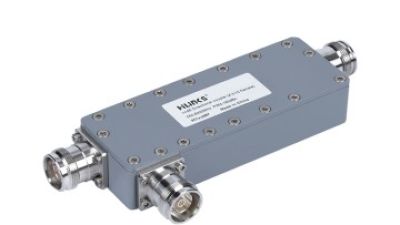
Innovative Applications and Features of the High-Power RF Coupler with Multi-Connector Options 951XX6X7
The innovative design of the High-Power RF Coupler with Multi-Connector Options 951XX6X7 provides a wide-band functionality, spanning frequencies from 550 to 6000 MHz. This extensive range makes it an ideal solution for a variety of applications, ensuring seamless performance across multiple platforms. Coupled with its low passive intermodulation (PIM) rating of less than -160 dBc, this coupler stands out for its ability to minimize signal distortion, which is particularly crucial in communication systems that rely on high signal integrity.
In addition to its technical prowess, the coupler is engineered for convenience and versatility. Its compact size and lightweight structure allow for easy installation in both indoor and outdoor environments. With a twist head connector type, users can experience hassle-free connectivity while ensuring secure and robust connections. This feature not only enhances the installation process but also contributes to the coupler's adaptability in various scenarios, from telecommunications to broadcasting, making it a valuable asset for engineers and technicians alike.
FAQS
: Waveguide couplers are critical components in optical communication systems that facilitate the efficient transfer of light between different optical elements, minimizing losses and maximizing coupling efficiency.
Mode matching is crucial because mismatched modes can lead to significant signal losses. Proper configuration of the coupler type is necessary to ensure compatibility with the optical components in the system.
Common types of waveguide couplers include directional couplers, Y-junctions, and other various designs, each suited for specific requirements of different optical systems.
Regular maintenance checks, testing coupling efficiency under various operating conditions, keeping optical surfaces clean, and protecting against extreme environmental factors can help maintain optimal performance.
Waveguide couplers are used in integrated photonic circuits for connecting devices like lasers and modulators, as well as in sensor technologies such as biosensors and environmental monitoring devices.
Future trends include miniaturization, integration with photonic circuits, advancements in material science, and the increasing use of technologies like silicon photonics to create more compact and efficient optical systems.
By ensuring minimal loss and efficient coupling between optical fibers and structures, waveguide couplers facilitate seamless data transfer essential for high-speed communication.
The growing demand for bandwidth and data-intensive applications is driving the need for faster data transmission and more efficient optical communication networks, catalyzing the development of waveguide couplers.
Waveguide couplers are anticipated to innovate areas such as telecommunications, data processing, remote sensing, and other optical technologies, revolutionizing information transmission and analysis.
Polymer waveguides provide avenues for cost-effective manufacturing and improved performance in optical communication systems, supporting the miniaturization and integration trends within the industry.
Conclusion
Waveguide couplers play a crucial role in optical communication systems by enhancing signal transmission efficiency and enabling smooth coupling between different optical components. Understanding the principles and functionality of waveguide couplers is essential for optimizing performance in modern optical networks. Various types of waveguide couplers are utilized, each offering distinct advantages such as reduced losses and improved alignment.
Despite their benefits, waveguide couplers face challenges and limitations, including fabrication complexities and scalability issues. However, ongoing research and technological advancements are paving the way for future developments that promise to enhance their capabilities. As the demand for faster and more efficient optical communication systems grows, waveguide couplers will remain integral to the evolution of optical technologies.